Select your language


- +49 (0)681 94005430
- kanzlei@dury.de
- Monday - Friday 08:00 - 17:00

EU Trademark Registration 2026: A Complete Guide for International Businesses
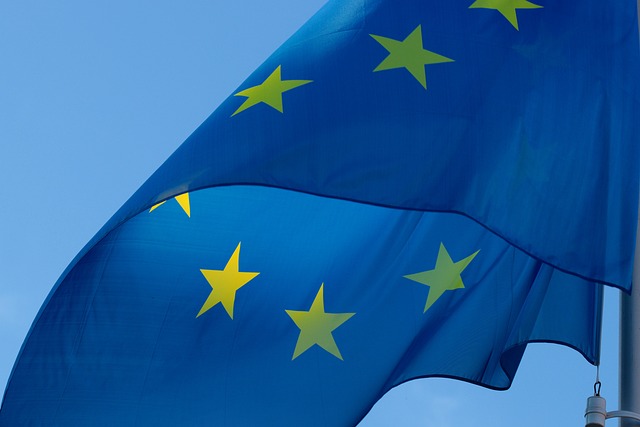 Planning to expand into the European market? Protecting your brand with an EU trademark (EUTM) is one of the most cost-effective ways to secure exclusive rights across all 27 EU member states with a single application.
This comprehensive guide walks you through the entire EUIPO trademark registration process in 2026 — including costs, timelines, classification, opposition proceedings, and common pitfalls to avoid.
What Is an EU Trademark?
An EU trademark (EUTM), registered through the European Union Intellectual Property Office (EUIPO), grants its owner exclusive rights to use a sign — such as a word, logo, slogan, or even a sound — as a brand identifier across all 27 EU member states. One application, one registration, one set of fees — full protection from Lisbon to Helsinki.
The legal framework is governed by Regulation (EU) 2017/1001 (the EU Trade Mark Regulation, EUTMR).
Why Register an EU Trademark?
- Unitary protection across 27 countries with a single filing
- Cost efficiency compared to filing 27 separate national applications
- Legal certainty with a registration that can be enforced EU-wide
- Seniority claims from existing national marks
- Basis for international expansion via the Madrid Protocol
- Deterrent effect against counterfeiters and free-riders
Step-by-Step: The EUIPO Registration Process
Step 1: Trademark Search
Before filing, conduct a thorough availability search. The EUIPO offers a free database (eSearch plus), but professional searches — including similarity searches across national registers — are strongly recommended to avoid costly oppositions.
Step 2: Classification of Goods and Services (Nice Classification)
Every trademark must specify the goods and/or services it covers, classified according to the Nice Classification system. This international system divides all goods and services into 45 classes (Classes 1-34 for goods, Classes 35-45 for services).
Choosing the right classes is critical: too narrow, and your protection has gaps; too broad, and you risk refusal or vulnerability to cancellation for non-use after five years. The EUIPO Harmonised Database and the TMclass tool help identify accepted terms.
Step 3: Filing the Application
Applications can be filed directly through the EUIPO online filing system (Fast Track or standard). The application must include:
- Applicant details (name, address, nationality)
- A clear representation of the mark
- The list of goods and services with Nice class numbers
- Payment of the filing fee
Fast Track filing is available when you use pre-approved terms from the Harmonised Database. This accelerates the examination phase.
Step 4: Examination by EUIPO
The EUIPO examines the application for:
- Formal requirements (complete application, correct fees)
- Absolute grounds for refusal (Article 7 EUTMR) — see below
Note: The EUIPO does not examine relative grounds (conflicts with earlier marks) ex officio. This is left to third-party opposition.
Step 5: Publication and Opposition Period
If the application passes examination, it is published in the EU Trade Marks Bulletin. From the publication date, third parties have three months to file an opposition based on relative grounds (Article 8 EUTMR).
If no opposition is filed — or if the opposition is unsuccessful — the trademark proceeds to registration.
Step 6: Registration
Once the opposition period ends without challenge, the EUIPO registers the mark and issues a certificate of registration. The entire process typically takes 4 to 6 months if unopposed.
Costs and Official Fees (2026)
| Fee | Amount |
|---|---|
| Application fee (online, 1 class) | EUR 850 |
| Second class of goods/services | + EUR 50 |
| Each additional class (3rd and beyond) | + EUR 150 per class |
| Renewal (after 10 years, online) | EUR 850 (1 class) |
Example: An online application covering three Nice classes costs EUR 1,050 (850 + 50 + 150).
At DURY LEGAL we charge a fixed fee of 950 € net for an EU-Application in 3 classes and a 10 year protection period, incl. drafting the EU trademark application, filing the EU trademark application and 10 years of EUIPO Representation.
Our attorney fees represent a wise investment — errors in the application process can be far more expensive to correct later. If you are not domiciled within a EU member state you need an EUIPO representative anyhow.
Absolute Grounds for Refusal
Under Article 7 EUTMR, the EUIPO will refuse registration if the mark:
- Lacks distinctive character (e.g., purely descriptive terms like "Fast Delivery" for logistics)
- Is exclusively descriptive of the goods/services
- Consists of customary signs or indications in trade
- Is contrary to public policy or morality
- Is deceptive (misleads consumers about the nature or quality of goods)
- Includes protected emblems, flags, or official hallmarks
- Is a designation of origin for wines/spirits without the appropriate origin
Distinctiveness is assessed in relation to the specific goods/services and from the perspective of the relevant EU public.
Relative Grounds for Refusal (Opposition)
The EUIPO does not check for conflicts with earlier rights on its own. Instead, owners of prior rights can file an opposition within three months of publication, based on:
- Identical or similar earlier trademarks for identical or similar goods/services (likelihood of confusion)
- Trademarks with a reputation in the EU (unfair advantage or detriment)
- Earlier non-registered marks or other signs used in the course of trade
- Agents marks filed without the proprietors consent
Opposition proceedings are inter partes (between the applicant and opponent) and typically take 12-18 months if not settled. A cooling-off period of up to 24 months is available for negotiations.
EU Trademark vs. National Trademark
| Factor | EU Trademark (EUTM) | National Trademark |
|---|---|---|
| Territory | All 27 EU member states | One country only |
| Application | Single filing at EUIPO | Filing at each national office |
| Costs | EUR 850 for 27 countries | Varies; adds up quickly |
| Vulnerability | Can be attacked EU-wide | Limited to national territory |
| Use requirement | Genuine use in a substantial part of the EU | Use in the specific country |
| Language | 2 languages (any EU + EN/FR/DE/ES/IT) | National language |
When to choose EUTM: You operate (or plan to operate) in multiple EU countries. The cost advantage is enormous — filing nationally in even three EU countries typically exceeds the EUTM fee.
When to choose national: You only operate in one EU country and have no expansion plans, or you need protection specifically resilient against non-use challenges.
Pro tip: A combined strategy often works best — file the EUTM for broad coverage and claim seniority from existing national registrations.
If an opposition is filed, add 12-18 months for opposition proceedings.
10 Common Mistakes — and How to Avoid Them
- No prior search: Filing without a comprehensive trademark search is gambling. An opposition can cost thousands in legal fees and years of delay.
- Wrong classification: Selecting too few or too many Nice classes. Too narrow leaves gaps; too broad invites non-use cancellation actions.
- Descriptive marks: Choosing a brand name that describes your product (e.g., "BioFresh" for organic food). These face refusal on absolute grounds.
- Ignoring the opposition period: Not monitoring the EUIPO Bulletin means you might miss oppositions against your own applications — or miss the deadline to oppose conflicting marks.
- Filing without professional advice: The EUIPO system is user-friendly, but strategic decisions — classification, mark design, response to office actions — require expertise.
- No enforcement strategy: A registered trademark is only as strong as your willingness to enforce it. Budget for monitoring and enforcement from day one.
- Forgetting renewal: EU trademarks must be renewed every 10 years. Miss the deadline, and you lose your rights.
- Not claiming seniority: If you already have national registrations, claim seniority in your EUTM application to preserve those rights.
- Inconsistent use: Using your mark differently from how it was registered can weaken your rights. Keep branding consistent.
- Underestimating the use requirement: After five years, your EUTM must be genuinely used in the EU. Mere token use is insufficient.
Why Work with a Specialized IP Law Firm like DURY LEGAL?
Trademark registration looks straightforward on paper or online. In practice, the strategic decisions you make during the process determine whether your brand is truly protected — or just appears to be.
A specialized IP law firm brings:
- Strategic classification that balances breadth of protection with enforceability
- Professional availability searches that go beyond free databases
- Experience with EUIPO proceedings, including office action responses and opposition defense
- International perspective for Madrid Protocol filings and multi-jurisdictional strategies
- Ongoing portfolio management, including monitoring, renewals, and enforcement
At DURY LEGAL, trademark law and IP portfolio management are core competencies. With over 20 years of experience in IT and IP law, we advise businesses worldwide on brand protection strategies — from initial filing through enforcement and international expansion.
Our trademark team handles hundreds of EU trademark applications annually, combining deep legal expertise with cutting-edge technology. We do not just file your trademark — we build a protection strategy that grows with your business.
Protect Your Brand in the EU — Get Started Today
Ready to register your EU trademark? Whether you are filing your first EUTM or managing an international portfolio, DURY LEGAL is your partner for strategic brand protection.
Contact us for a consultation:
- Contact Form: https://www.dury.de/en/contact
- Email:
This email address is being protected from spambots. You need JavaScript enabled to view it. - Phone: +49 681 9400560
- Locations: Saarbruecken and Frankfurt am Main
DURY LEGAL Rechtsanwaelte — Your EU Trademark Attorneys.